Profile
Rose Lewis
Rose Lewis is an artist, musician, and general busybody based in Portland, OR. Her work is deeply rooted in the DIY tradition of the global punk community and encompasses media including drawing, printmaking, zine-making, show booking, painting in oil and watercolor, writing, electric guitar, and soup. Find her work at rose-lewis.space.
Alex Deets
Deets is an interdisciplinary artist based in Portland, Oregon. Previous work centered ideas of transgender embodiment, more specifically themes of privacy and permission. They’ve shown work at Littman Gallery, AB Gallery, The Envelope, The Cleaners, ABC No Rio, and on the cover of Bitch Magazine. In 2018, Deets won second place for the Arlene Schnitzer Visual Arts Prize. Lately Deets has been engaging with the Portland community as a peer support counselor, creating spaces for those who have disabilities and mental health struggles to work creatively to move out of isolation and toward connectedness. They were a visiting artist at Elbow Room, a non-profit community art studio focused on providing material support, mentorship, and meaningful exhibition opportunities for community members who experience developmental and intellectual disabilities. Currently Deets is thinking a lot about how to collaborate with the animal, spirit and natural worlds on their terms.
Justin Maxon
Justin Maxon (1983) was born and raised in a number of small towns in the woods of northern California, where he grew up part-time on the Hoopa Valley Indian Reservation. Maxon is an award winning visual storyteller, arts educator, and journalist that often utilizes social practice to examine social, political and environmental issues. He has received numerous awards for his photography and video projects, including two 1st place awards from World Press Photo, the Deeper Perspective Photographer of the Year at the Lucie Awards, the Aaron Siskind Foundation Fellowship, and the Alexia Foundation for World Peace Professional Grant. He was selected to participate in World Press Photo’s Joop Swart Masterclass. He has given more than 50 lectures and has taught photography workshops in over 8 different countries across the world. He was a teaching artist in an US State department sponsored cultural exchange program between the United States and South Africa. He has worked on featured stories for publications such as TIME, Rolling Stone, the New Yorker, Mother Jones, and NPR.
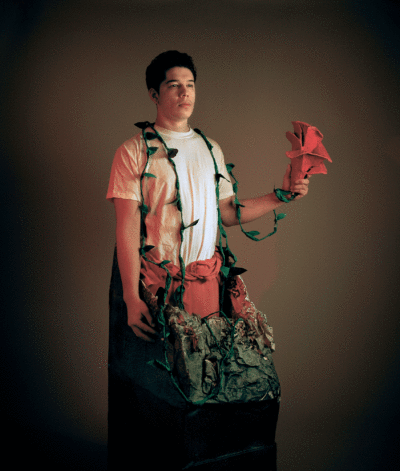
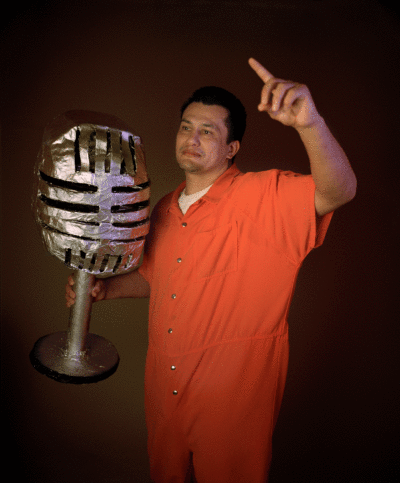
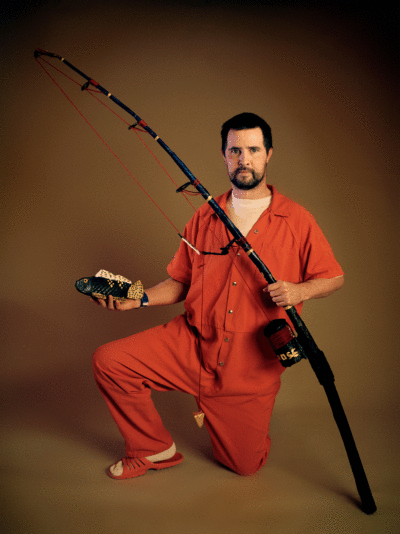
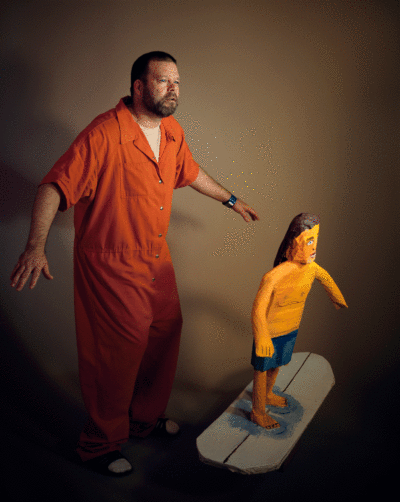
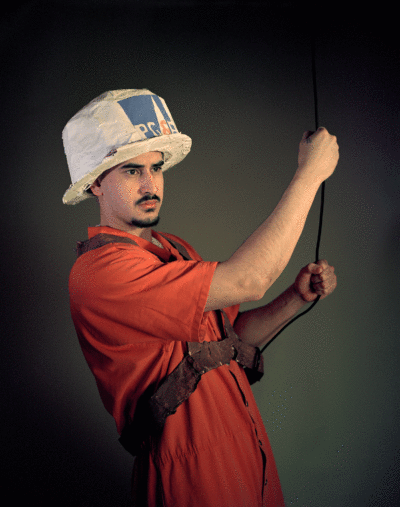
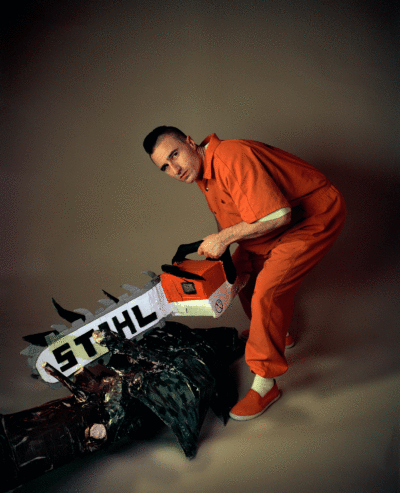
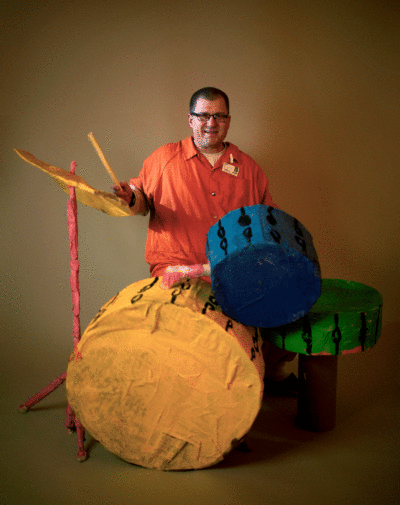
Livin’ the Dream, is a participatory media project undertaken in collaboration with artist’s Leslie Castellano and Laura Montagna, at the Humboldt County Correctional Facility in Eureka, CA. The project centered around the participants identifying an aspiration they wish to pursue once being released and constructing handmade objects, utilizing material available to them, symbolic of their goal.

Patricia Vázquez Gómez
Patricia Vázquez Gómez works and lives between the ancient Tenochtitlán and the unceded, occupied, stolen and colonized lands of the Chinook, Clackamas, Multnomah and other Indigenous peoples. Her art practice investigates the social functions of art, the intersections between aesthetics, ethics and politics and the expansion of community based art practices. She uses a variety of media to carry out her research: painting, printmaking, video, exhibitions, music and socially engaged art projects. The purpose and methodologies of her work are deeply informed by her experiences working in the immigrant rights and other social justice movements in the US and Mexico. Patricia’s work can be explored at patriciavazquez.art.
Rebecca Copper
Rebecca Copper (b.1989) is an interdisciplinary artist based in the occupied Shawandassee Tula lands, also known as Columbus, Ohio. She’s interested in phenomenology and ontology, how perceptions of reality live against one another. And, how versions of reality are mediated back to us through authoritative bodies or institutions with a particular interest in power. Rebecca is deeply interested in the hyper-reduction of categorical research, and the elevation of sensory-based, experiential knowledge that we all hold.
rebeccalcopper.net
Emma Duehr
she/her
eduehr@pdx.edu
emmaduehrmitchell.com
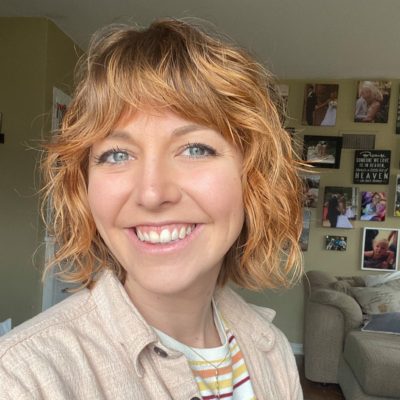
Emma Duehr is an artist, educator, and curator living and working in Portland, Oregon. Her work centers collective storytelling, care, and exchange while working within domestic practices such as gardening, craft, and mail. Her work explores the intersection between public and private spaces, personal and collective value, and the constitution of qualifications. With emphasis on accessibility and social engagement, neighborhoods, metropolitan surroundings, social media, and museums are a few spaces which her work occupies.
She is the Founder of the People’s Plant Museum, an archive and gallery space that preserves the history, stories, and relationships between houseplants and people. She is the Organizer of Talking Tushies, a project that embroiders sexual violence statistics on patches and invites survivors around the world to share their experiences with sexual violence. Her Homes for Homes Project archives residential structures that hold valuable memories. She teaches at Portland State University and is an Artist Mentor at King School Museum of Contemporary Art (KSMoCA). Her work has been exhibited in Africa, Canada, France, Italy, Spain, United Kingdom, and within the United States.
Emma is in her final term in the MFA Art and Social Practice Program at Portland State University.
People’s Plant Museum (PPM) was founded by Artist Emma Duehr Mitchell as a space for the collection of plants. Living within her plant-filled home in East Portland, she was surrounded by plants gathered from specific people and places, each embodying their own story. She observed the impact plants and humans have on each other and saw a need for collecting, tending, and sharing the history of individual plants. People’s Plant Museum preserves the stories and relationships between plants and people, while exploring the intersection of public and private spaces. The physical plants are exhibited in the 765 sq ft gallery space located inside a residential building in East Portland, Oregon. The museum displays plants alongside interviews with their respective caretakers in the digital archive. All plants in The Collection have been exchanged by people through methods of propagation, trade, and donation. The museum compiles individual plant biographies united by common themes, and invites artists and curators to facilitate projects and events.
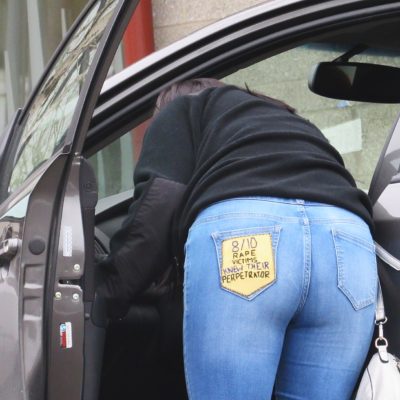
Talking Tushies embroiders sexual violence statistics on patches for clothing items and invites survivors around the world to share their experiences with sexual misconduct. These accounts are shared and archived on the project website and in sculptural installations. People are invited to wear the Talking Tushies patches on locations of the body associated with unsolicited sexual objectification to confront the male gaze in public places. Participants can purchase the patches or follow a do-it-yourself template for the project; the project also hosts workshops for participants to create their own patches. Individuals around the world wear the patches and collectively transform everyday public spaces into a collaborative protest against disrespectful sexual behaviors.
The project’s online presence invites participants to discuss issues related to sexual violence, share their stories, and submit photos wearing their patches. Outside of the United States, Talking Tushies has an international community with participants in Africa, Canada, France, Italy, Spain, and the United Kingdom. Talking Tushies works to continue the history of women who transform domestic arts practices into political activism. Talking Tushies was created to empower women to walk fearlessly and with confidence while navigating public spaces.
In Collaborations with Olivia, Emma Duehr Mitchell works with Olivia on a series of art projects, spanning novel writing, short story writing, painting, sewing, embroidery, baking, etc. as part of the King School Museum of Contemporary Art (KSMoCA) Artist Mentorship Program.
Illia Yakovenko / Ілля Яковенко
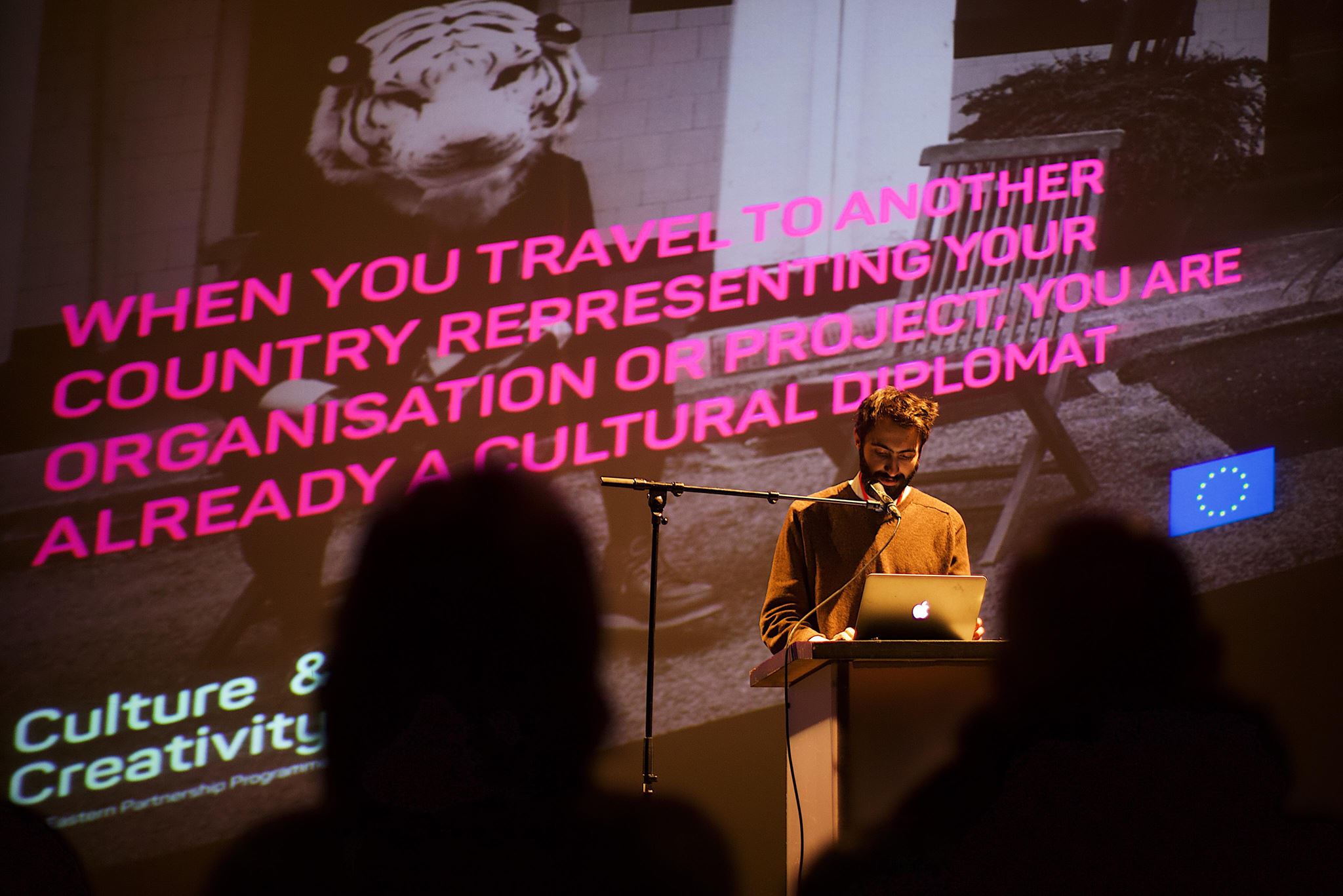
I’m an artist and a citizen cultural ambassador from Ukraine in Portland. I’ve received a Fulbright scholarship and currently pursue a graduate degree in Art and Social Practice at Portland State University. On this page, I share my cultural exchange activities in the United States.
International Acquisition Committee
Currently I’m an artist-in-residence at the Dr Martin Luther King Jr School Museum of Contemporary Art (KSMoCA). There I’m working on the International Acquisition Committee. The committee consists of myself and a group of Dr. Martin Luther King Jr Elementary School students, together with whom we learn about international art and artists in creative and experiential ways (engaging with artists, recreating artworks, exploring their meaning and its relation to students’ own experience and the local context). One of our goals is to start a collection of international art and bring international artists to KSMoCA.
KSMoCA Presentations
In this presentation I’m giving a general overview of the International Acquisition Committee and sharing my own collection of Soviet coins, badges, and postcards:
Cultural Exchange Mission
Ukraine has become widely present in the American media and political discourse since the Maidan Revolution followed by the Russian intervention, and the recent impeachment inquiry. But how well do people in the United States know about Ukraine, about its history, politics, art, and culture? People often ask me about the food we eat in Ukraine but rarely about the Maidan Revolution or political issues Ukrainian artists, or society, are dealing with in their work or everyday life. Currently Ukraine is facing Russian intervention, war, other global and domestic challenges and is desperately in need of being supported as an independent country with its own political agency and representation.
Ukraine was always hard to grasp, define, subject or subjugate, and it often served as a destabilizing factor for the imperialist politics of Russia and the Soviet Union undermining it from the inside. Sometimes it is even challenging for Ukrainians to define their own identity and find a consensus on what their country should be like. But instead of seeing it as a negative factor, I propose to recognize it as an endless horizon of possibilities consisting of constantly changing identities and openness to social diversity and inclusion that is foundational for a sustainable democracy.
I hope this resource will help to establish a deeper mutual understanding between the people of Ukraine and the United States.
This webpage is a social practice artwork. It is not an official site of the Fulbright Program or the U.S. Department of State. The views expressed on this webpage are entirely those of the artwork participants and do not represent the views of Illia Yakovenko, the Fulbright Program, the U.S. Department of State, or any of its partner organizations.
Cultural Exchange Reports
Eastern European Groceries Tour with Artist Michael Bernard Stevenson Jr.
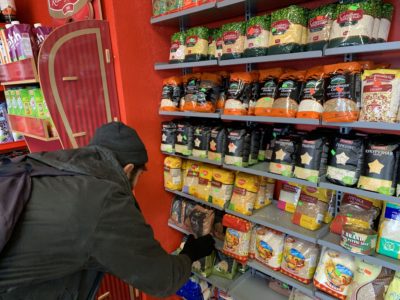
My student mentor Artist Michael Bernard Stevenson Jr. took me to visit Eastern European grocery stores in Portland. During our trip we visited approximately five grocery stores. A map of the stores is coming soon.
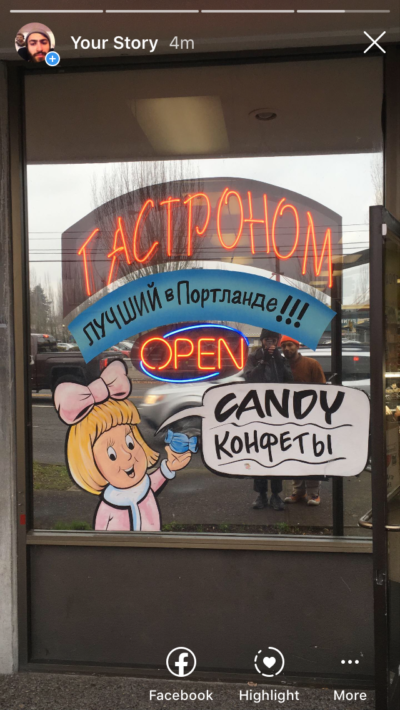
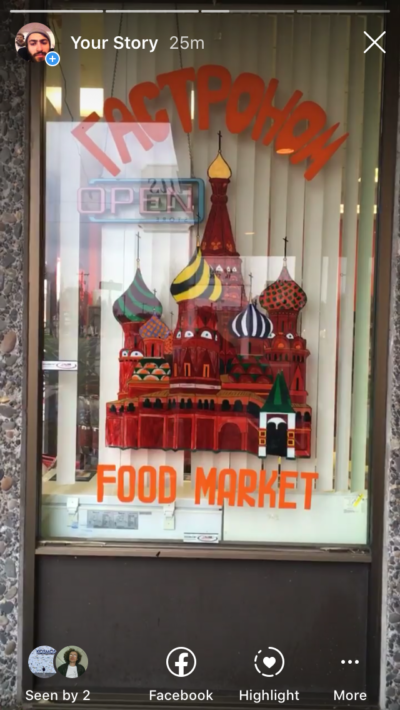
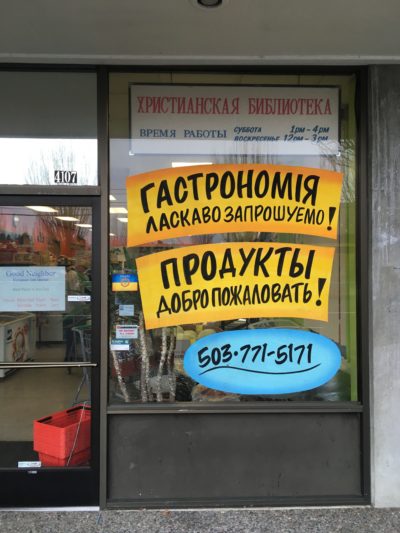
Storefronts (visual analysis)
Most of the stores appealed to recognizable Soviet and Russian images in their design. Only one storefront had a sign written in Ukrainian. Although people inside that store were mostly speaking Russian. Whereas some staff members at the store that had an image of St. Basil’s Cathedral at the storefront were speaking Ukrainian.

Goods
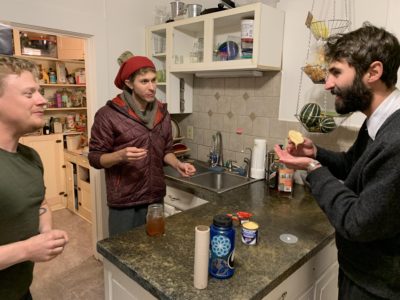
I very rigorously examined the products available at the stores. Most of the things are being imported from the former Soviet countries including Ukraine, Russia, Belarus, Kazakhstan, etc. We found the same brand of candy Chervony Mak (UA) or Krasnyi Mak (RU) currently produced in both Ukraine and Russia but that has originated in the Soviet Union. The Russian candies are continued to be produced at the formerly Soviet Red October (Krasnyi Octyabr) candy factory. Ukrainian candies are produced at the Roshen factory that belongs to the former president of Ukraine Victor Poroshenko. I told this to Michael and later to other people while they were tasting the candies. I personally think the Ukrainian version tastes better. We also spoke about the war in Ukraine and the Russian intervention.
by Artist Michael Bernard Stevenson Jr. 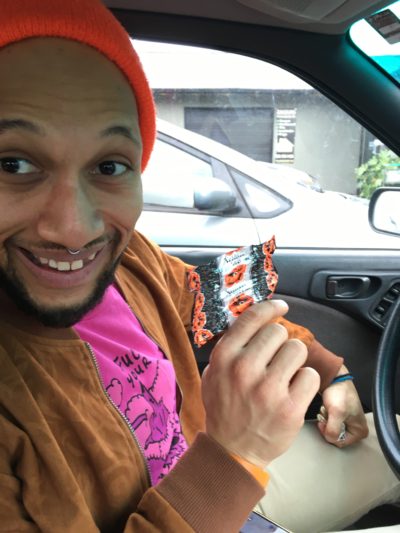
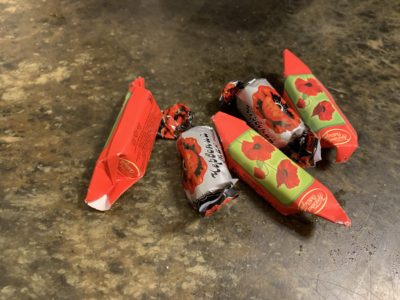
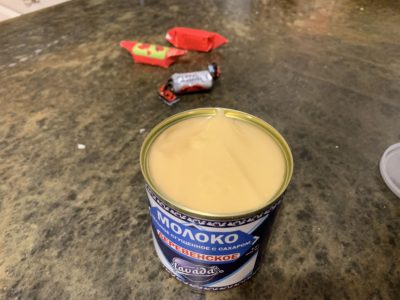
The topic of war emerged again when we were trying condensed milk. We got a can at one of the grocery stores. The can had a very recognizable Soviet design even though it was produced in the United States. Condensed milk associates in America with Vietnamese coffee and the Vietnam War.
Dinner
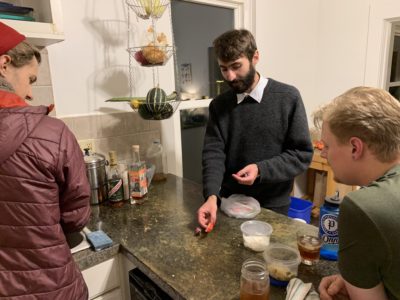
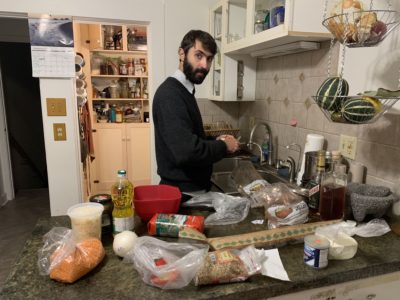
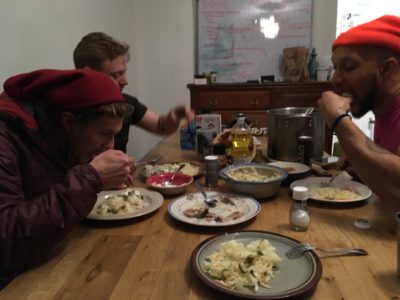
We further had a dinner made out of boiled potatoes, pickled cucumbers, sauerkraut, Moldavian white cheese (brynza). I told that people in Ukraine are usually having this food during the winter because it is more accessible. Everyone was positively impressed by the food!
Contact
Illia Yakovenko
Master of Fine Arts Candidate in PSU Art and Social Practice
SoFa Journal editorial board member
Social Practice Club student administrator (PSU’s Student Activities and Leadership Program)
Student Art Mentor at KSMoCA (volunteer position)
Office Hours
Remote, by appointment;
Office Address
RemoteRoom 158E
PSU Science and Education Center (SEC)
2130-2136 SW 5th Avenue, Portland, OR 97201-4908
Email
iykvnk @ gmail.com and iy2 @ pdx.edu
Website
http://illia.cf
Mo Geiger
Mary Olin (Mo) Geiger is an artist. After studying to be a theatrical designer and technician, she began her career working in physically challenging settings where building environments was a gritty, communal art. Since then, she’s created interdisciplinary, collaborative artworks, designs, and research projects seen in art galleries, theaters, museums, public places, and local organizations. For her, tactile learning with and from others is a necessary method of relating. View more of her work on her website here.
Living material histories, interaction, scavenge, discard, transformation, and labor connect all of her artwork and research. She develops projects with a site- and context-specific perspective that considers active and potentially overlooked elements wherever she is. Along with creating artwork, she continues to freelance in theatrical scenic design, fabrication, scenic painting, and architectural/object conservation. She is a co-founder of the south-central Pennsylvania performance collective Valley Traction. She warmly invites correspondence via email for information on projects, commissions, or potential collaboration.
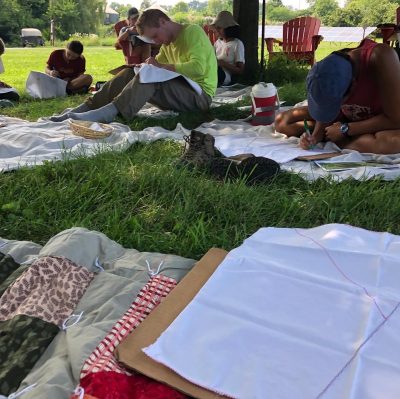
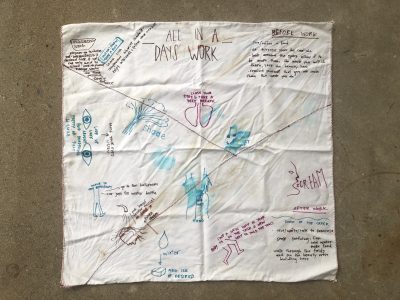
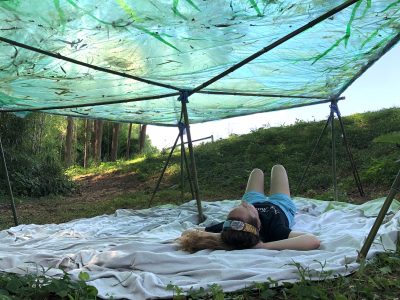
created by Valley Traction performance collective
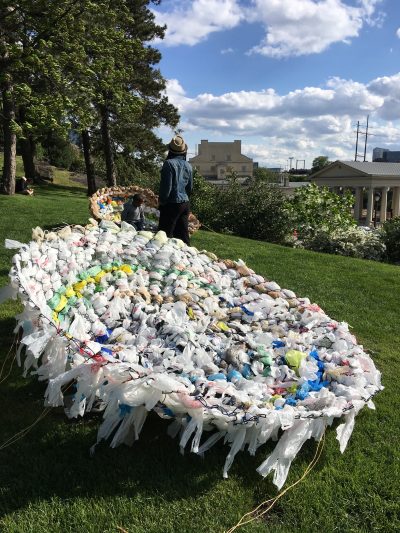
Interactive sculptures at Philadelphia’s Schuylkill Waterfront Park, presented by Art in the Open
Shelbie Loomis
Shelbie Loomis is a publicly engaged artist and former banker, who focuses her time and efforts on socio-economic research and creates artwork about forgotten social groups such as the Santa Fe New Mexico elderly, third-world countries that she has traveled to, and as of late a social group called the precariat such as immigrants, students, and part-time workforce.
She is engaged with the community by working on murals through Keeping Santa Fe Beautiful, sat on the New Mexico Professional Business Women of Santa Fe executive board which involves themselves with legislation for equal opportunity for jobs and education for women, and as of Fall 2019 has moved to Portland to work on her MFA at Portland State University in Art + Social Practice.
Loomis graduated from Santa Fe University of Art and Design in 2014 with a Bachelor’s of Fine Arts Magna Cum Laude after receiving the first Governor’s Scholarship for full tuition in 2010. Since then she has been honored as a 2013 SITE Santa Fe Scholar, President’s Departmental award recipient, and awarded the 2017 Young Professional Business Women of Santa Fe.
She hopes to continue conversations about socio-economics, gender, social and financial norms and include more people of diversity through education, artwork, and workshops and much more.
Carlos Reynoso
Buenas tardes mi nombre is Carlos Reynoso, I am originally from Los Angeles but was born in Mexicali Baja California. As a kid growing up in SoCal I was inspired by the street food culture in East Los Angeles and by the various DIY subcultures I grew up around through punk shows and house parties. I earned a BA in Illustration at California State University Northridge, while in school I was involved with MEChA where I helped organize various cultural events on campus. After graduating I started working in nonprofit in HIV organizations, and Mental health and addiction. My work is a mixture of community empowerment, storytelling, and chicanx queerness. While establishing a career in social work I used my training as an illustrator to create flyers for various community events inspired by artist like Raymond Pettibon and Danial Johnston.
Current Work:
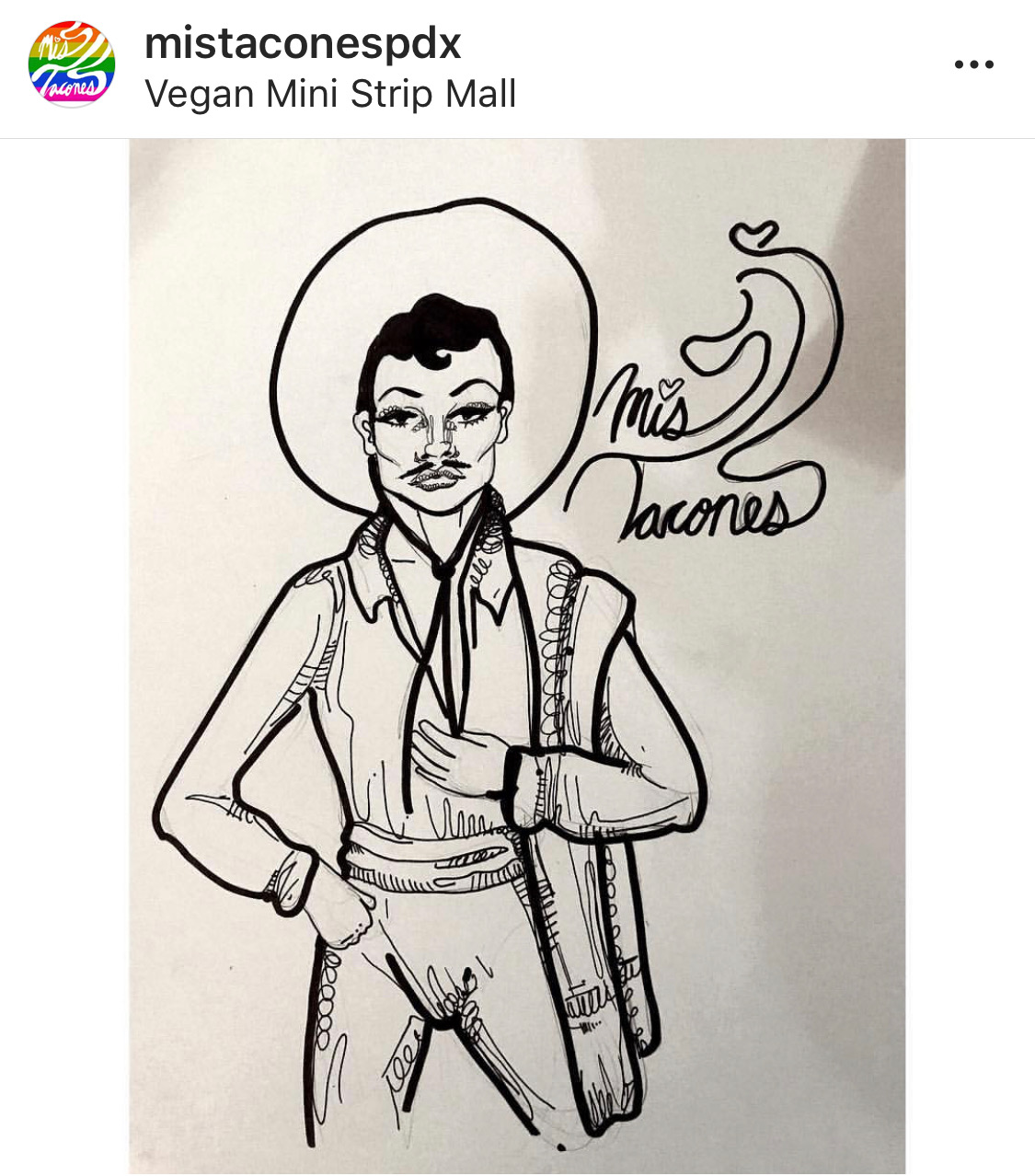
Three years ago, I moved to Portland OR and quickly realized how much I missed Mexican street food. As a result, I created Mis Tacones @mistaconespdx a vegan taqueria serving freshly pressed tortillas and seasoned protein similar to that found in East Los Angeles and Baja California. As a teenager and through college I worked in various kitchens in Los Angeles and found the macho centric atmosphere suffocating, so I decided to use Mis Tacones as a queer ran and operating business supporting the community and creating safe space. For the past three years Mis Tacones has partnered up with various vegan and queer businesses and organizations in organizing community events and creating cultural space in Portland.
Work in the Works:
In the next year I hope to establish a permanent location for Mis Tacones as a store front where we can operate as a restaurant and allow community space. Currently I am also working on a story telling project in telling the history of Bath Houses in Los Angeles through a publication or zine.