News
Answers Without Words in Oregon Arts Watch
Program alum Anke Schüttler’s project Answers Without Words was featured in an article by Oregon ArtsWatch.

PSU Social Practice named in Top 15 MFA programs in US.
Artsy featured the PSU Social Practice Program in a list of the top 15 MFA programs in the US.

KSMoCA International Art Fair & Summer Artist Residency

Announcing open enrollment for a summer session hosted by Art & Social Practice in collaboration with the King School Museum of Art! Students and artists interested in participating in the summer artist residency program can find enrollment information below.
Are you interested in how contemporary art intersects with everyday experiences in a public elementary school? Join the KSMoCA summer residency program and participate in a fun and socially-engaged collaborative art project.
Over the course of 4 weeks, participants will act as Artists In Residence at KSMoCA to produce the KSMoCA International Art Fair through a collaborative, experiential learning process. The art fair will include a group of 25 elementary school student “docents” and art institutions in Portland including: PICA, UpFor, Newspace Center for Photography, PNCA, and more! The KSMoCA International Art Fair will take place August 11-13, 2017 as part of Converge 45.
The program is almost full, sign up now!
Open to non-artists and non-PSU students. Enrollment instructions can be found by clicking here.
Dates: July 24 – August 17 (M-Th), 12-4 PM
Credits: 4 (undergraduate or graduate)
Cost: $624 (Resident), or $2,092 (Out-Of-State)
Art 410 (Undergrad): CRN #81699
Art 510 (Grad): CRN #81700
Questions? Email amaevans@pdx.edu
The Music That Makes Us
The Music That Makes Us was a neighborhood music festival and local history archive project of the Kenton neighborhood produced by the PSU Art & Social Practice Program and presented at Disjecta in Portland, OR in 2016.
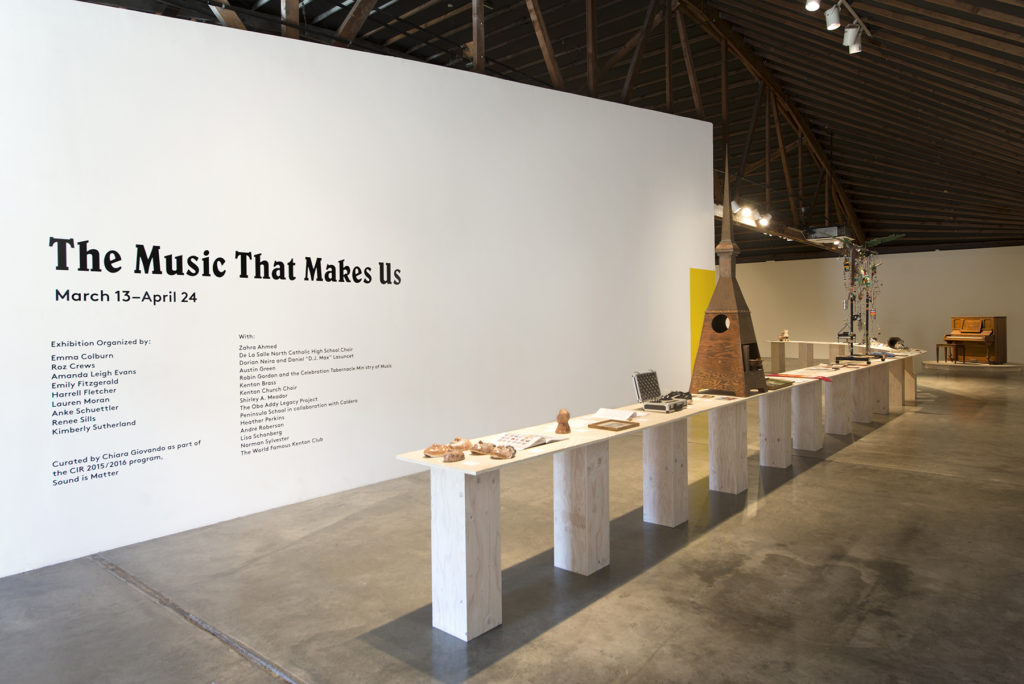
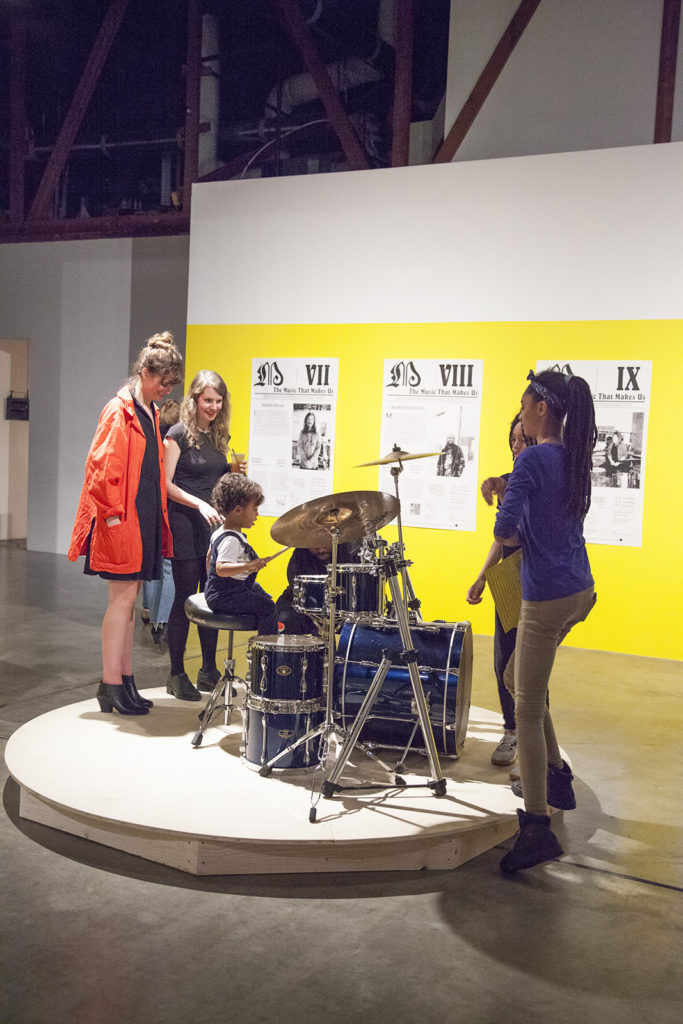
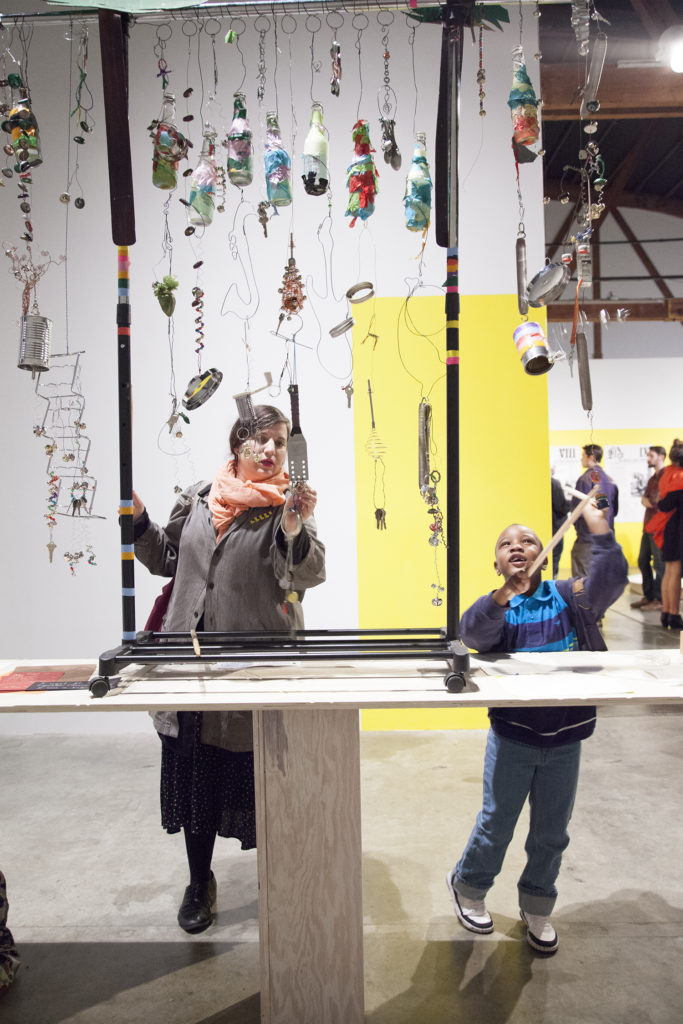
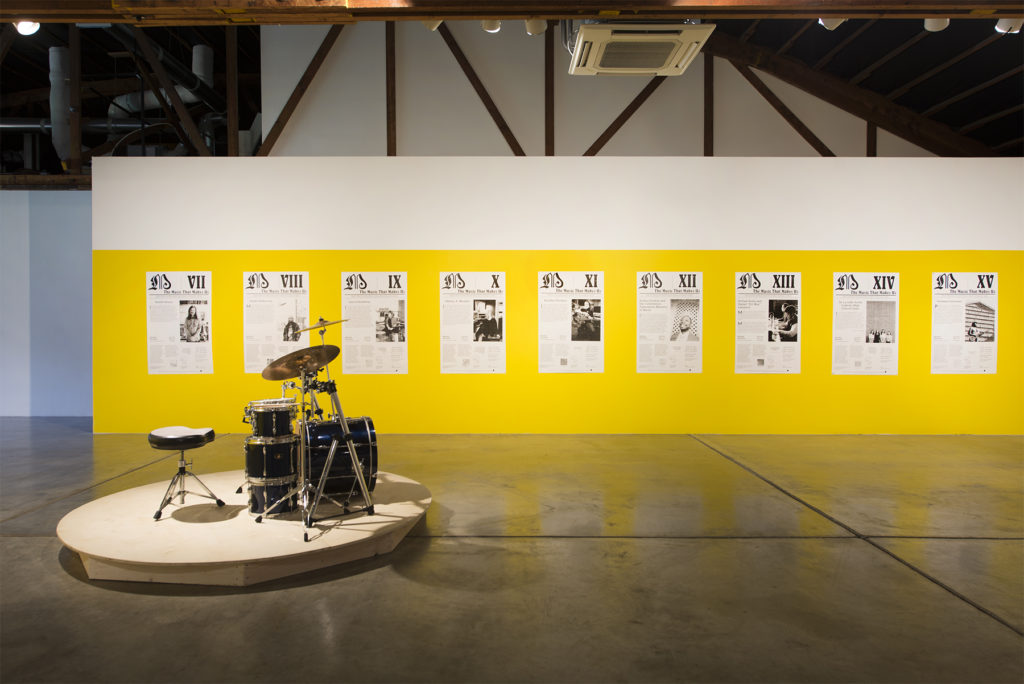
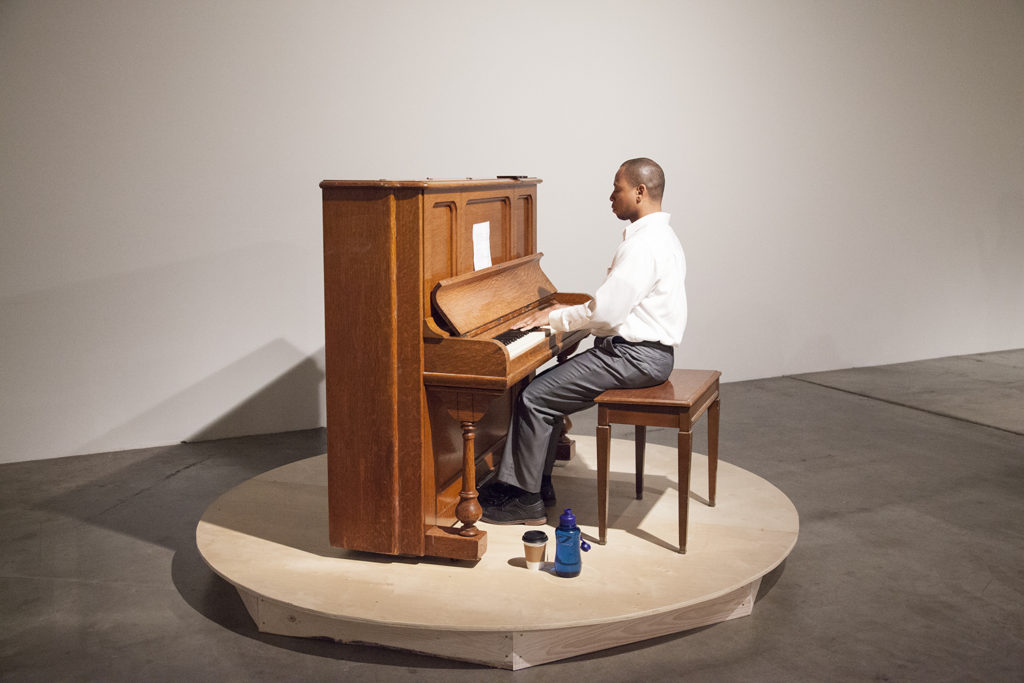
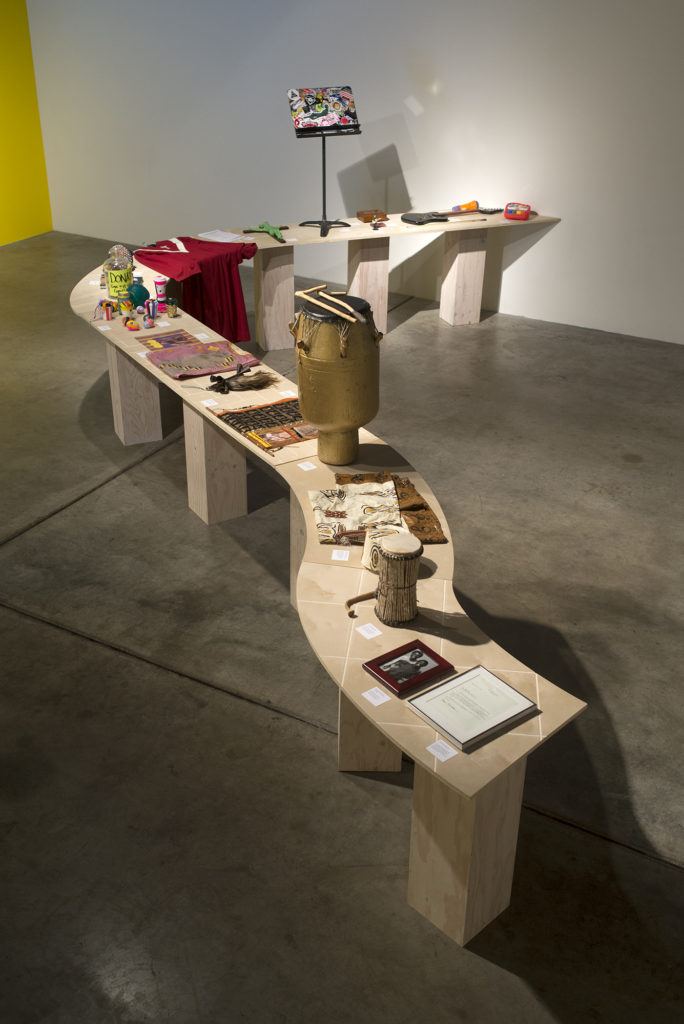
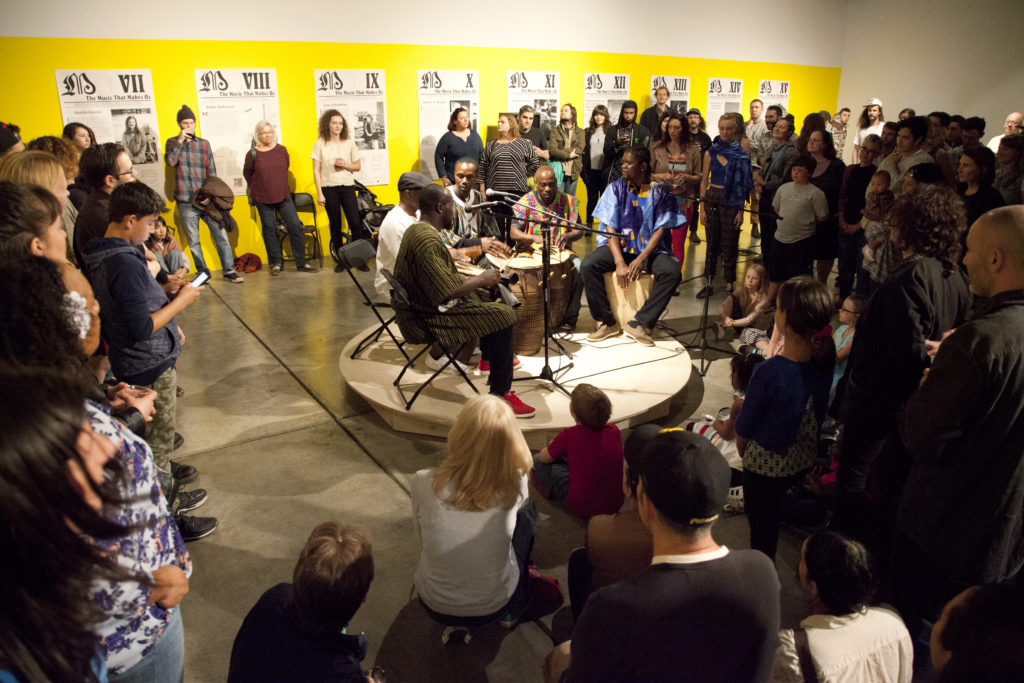
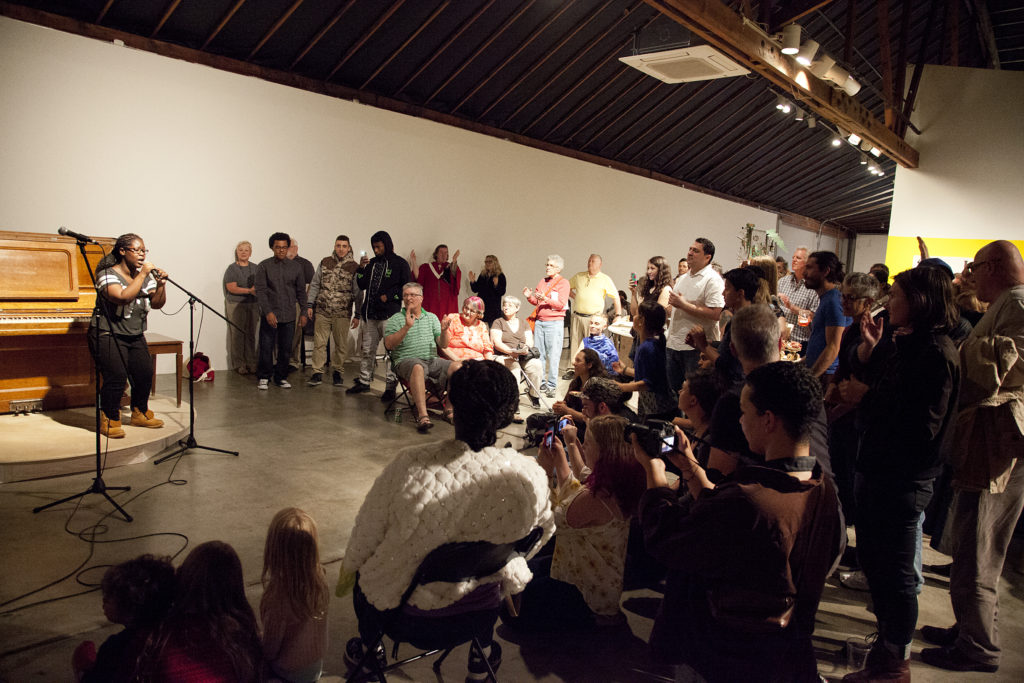
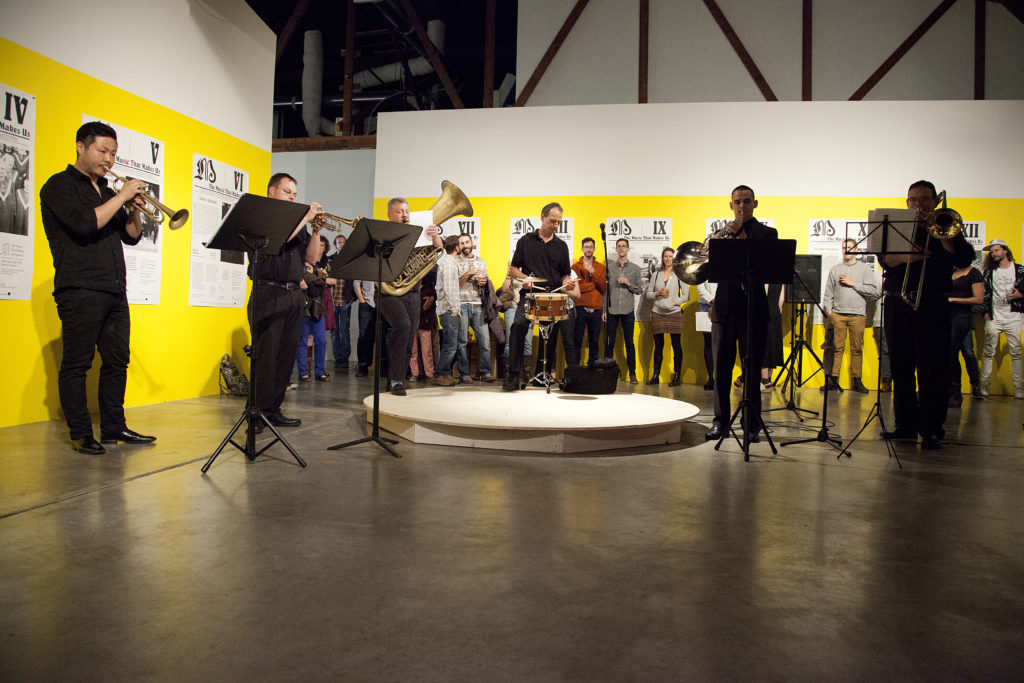
The Music That Makes Us is an exhibition, music festival and local history archive project that investigates a neighborhood through its music and emphasizes the value of diverse musical expression within a community. 15 different musicians and music groups from Kenton collaborated with us to create a living history archive of the neighborhood through shared personal artifacts, ephemera, and stories from their musical practice. The project seeks to highlight the broad range of musical experiences in the neighborhood and investigates how those practices intersect. Throughout the duration of the show there were spontaneous band practices in the gallery, group singalongs, dance parties, and a guided audio walk that explored Kenton through field recordings and stories from the participants. The project culminated in a live music festival with dueling stage performances by the musicians featured in the exhibition.
Musicians: Zahra Ahmed, De La Salle North Catholic High School Choir, Dorian Neira and Daniel “D.J. Max” Lasuncet, Austin Green, Robin Gordon and the Celebration Tabernacle Ministry of Music, Kenton Brass, Kenton Church Choir, Shirley Meador, The Obo Addy Legacy Project, Peninsula School in collaboration with Caldera, Heather Perkins, André Roberson, Lisa Schonberg, Norman Sylvester, and The World Famous Kenton Club.
Events during the exhibition included:
- Opening Night, with piano music by Robin Gordon, Dorian Neira, Daniel Lasuncet and Shirley A. Meador
- The Kenton Audio Walk, a collective group outing streaming a guided audio tour of the Kenton, produced by Renee Sills and narrated by Paula Sylvester, a longtime Kenton resident. The audio tour is a collection of interviews and field recordings that were taken in the neighborhood during February and March of 2016, and acts as an audio archive of Kenton during a transitional period marked by rapid growth and change. Listeners are invited to experience the landscape of the neighborhood through the individual and collective memories of those who have created it. Listen to it here.
- Family Music Workshops at Peninsula School in collaboration with Caldera, Julie Keefe and Afro Kidworks Dance.
- Kenton Brass: Open Practice Sessions
- Kenton Music Festival and exhibition closing reception featuring dueling songs on two round stages with live music from each musician and music group represented in the exhibition.
Special thanks to Chiara Giovando, 2015-2016 Curator in Residence at Disjecta who invited us to produce this project.
Art & Social Practice in the NY Times
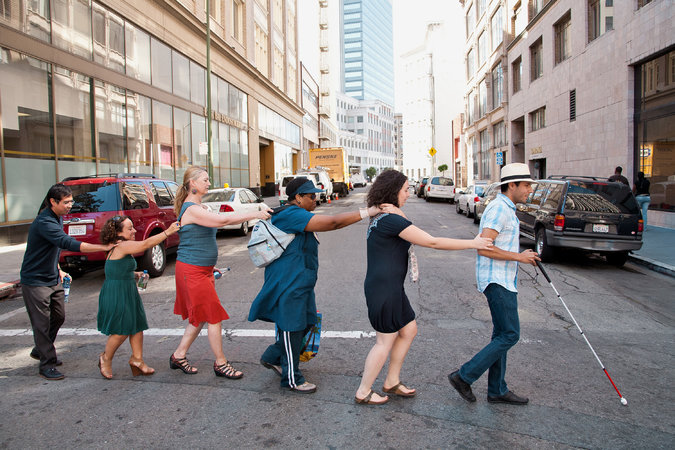
Social Practice Degrees Take Art to a Communal Level
Harrell Fletcher and alumni Molly Sherman, Nolan Calisch, and Carmen Papalia are highlighted.
Likewise Fridays!
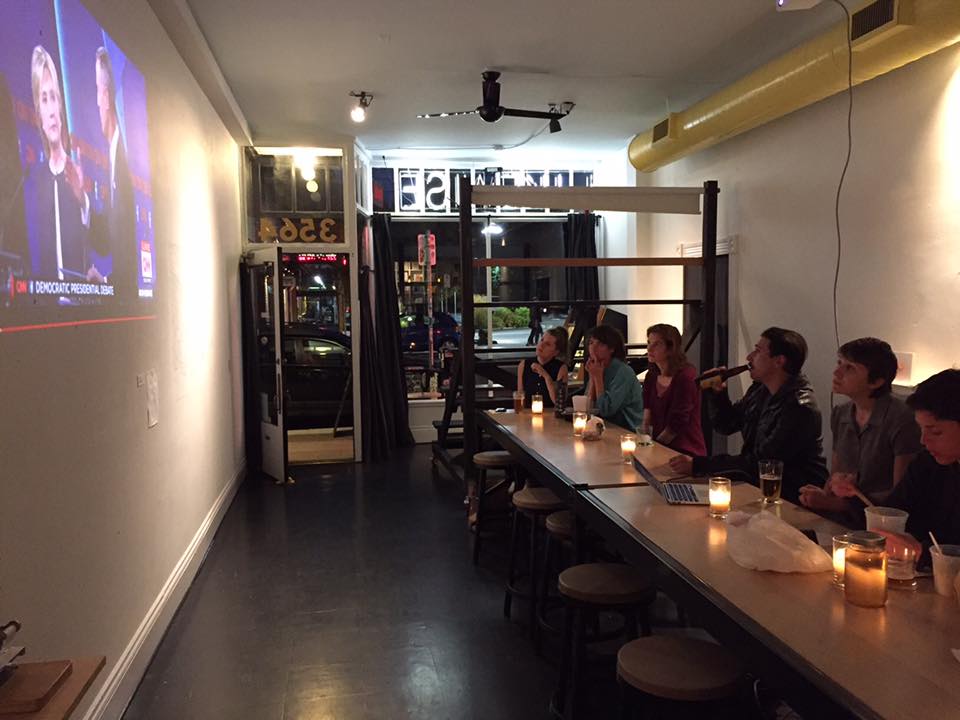 A weekly event for people and pets interested in Art & Social Practice; a casual place to share projects, learn about other people’s projects, discuss best practices, be critical but chill. These get-togethers take place during the 2015-2016 school year.
Art and Social Practice is an artistic approach that emphasizes collaboration, shared authorship, public participation, site-specificity, and interdisciplinarity. It is often presented in non-art locations, and has no media or formal boundaries. If you want to present your work to a social practice interested audience, contact roz@pdx.edu to arrange.
Hosted at Likewise from 5(ish)-8(ish) PM
3564 SE Hawthorne Blvd, Portland, OR 97214
See You Again
See You Again was collaborative, caucus-vote museum acquisition project produced by the PSU Art & Social Practice Program and presented at the Portland Art Museum in Portland, OR in 2015.
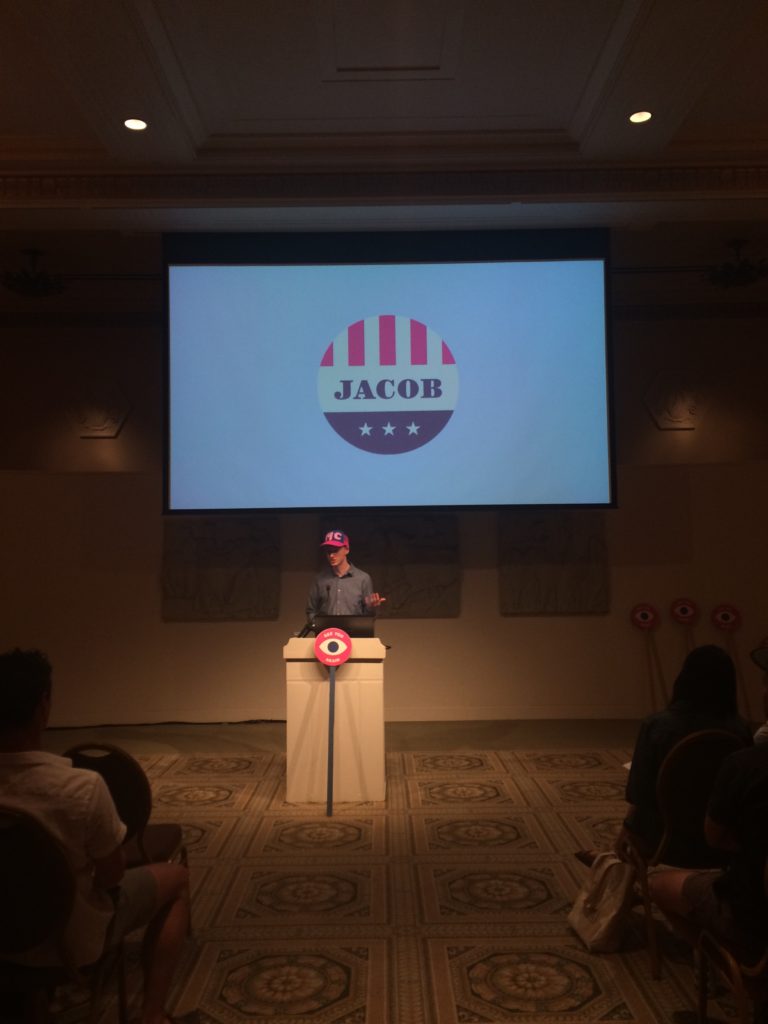
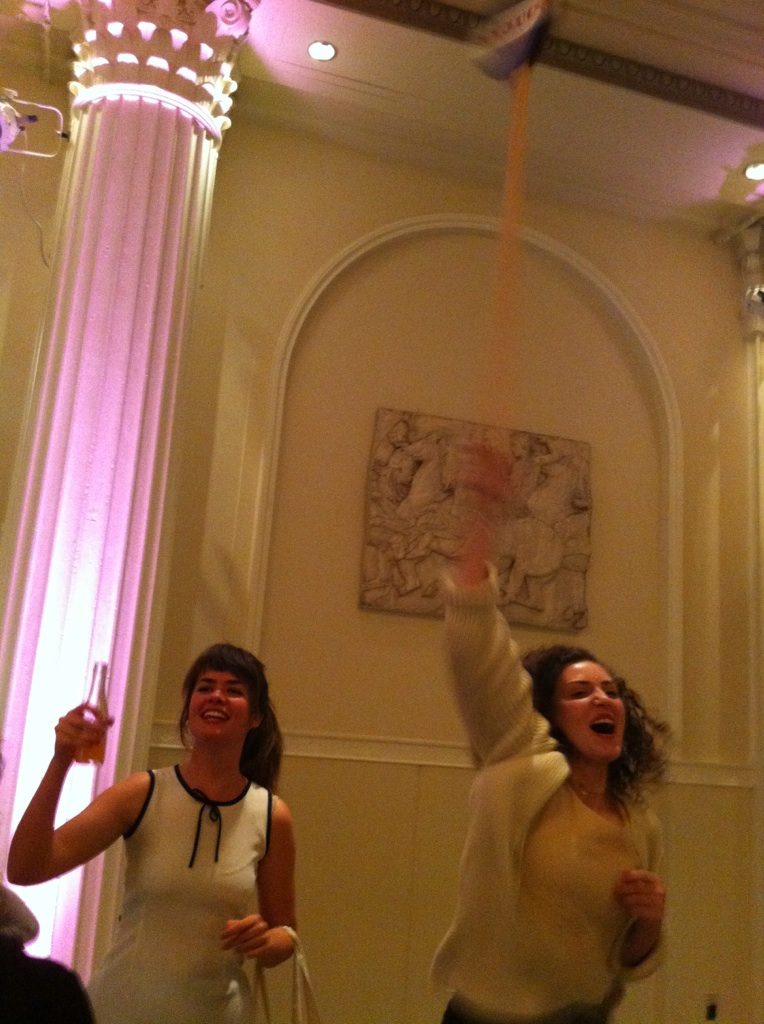
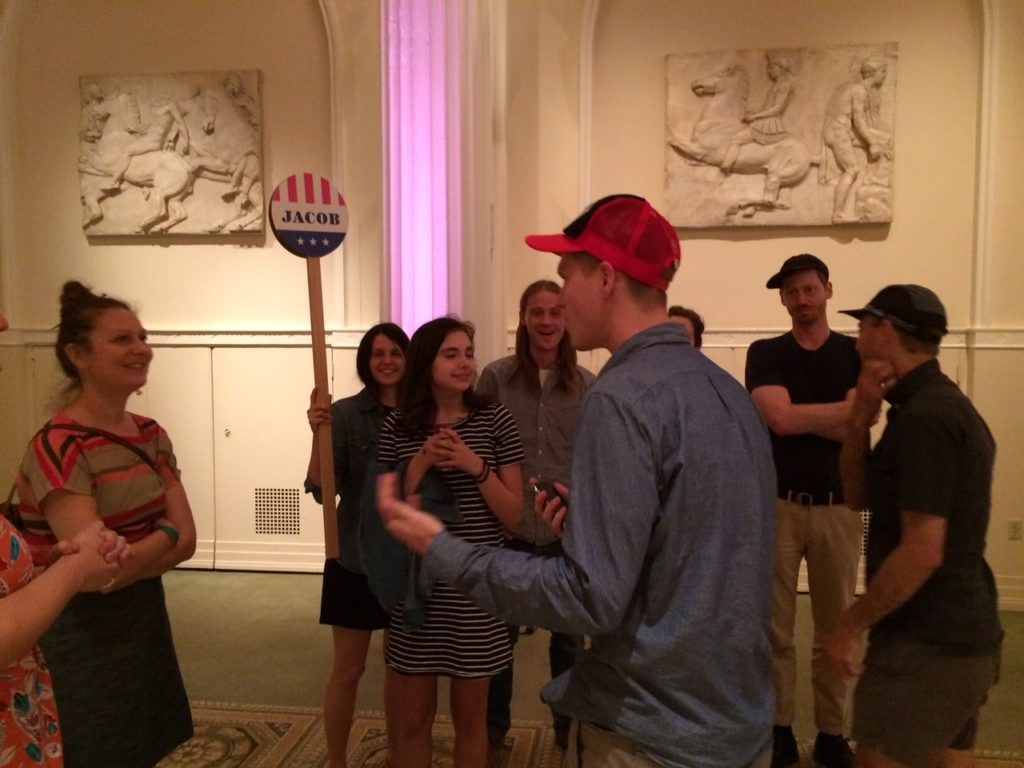
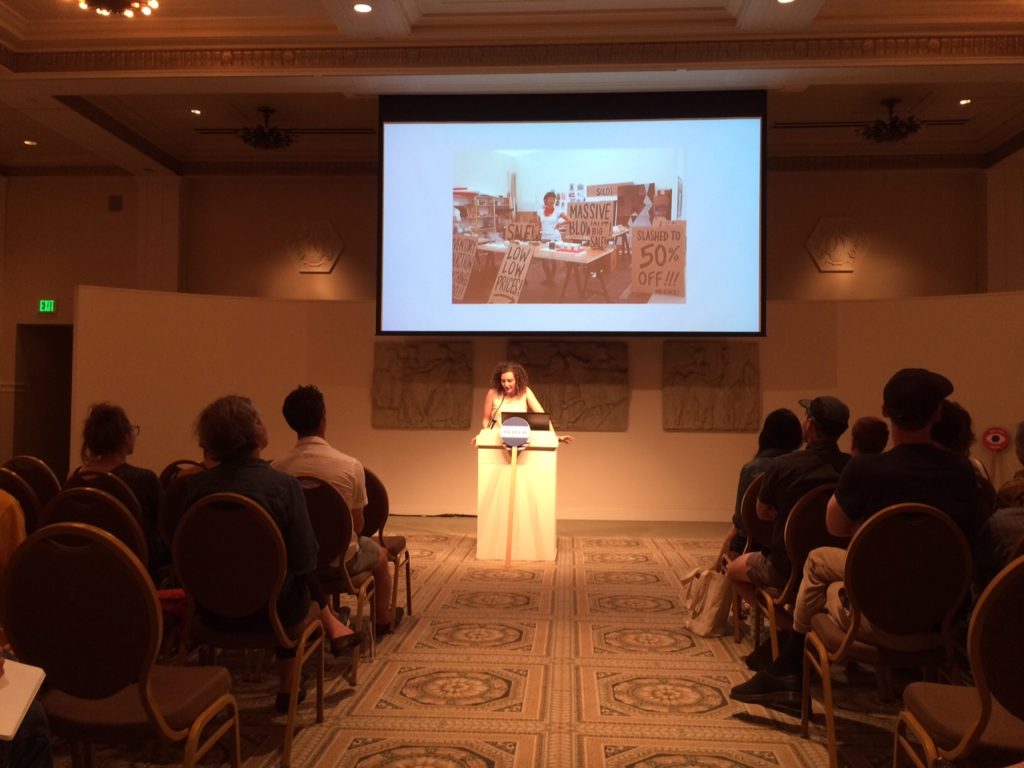
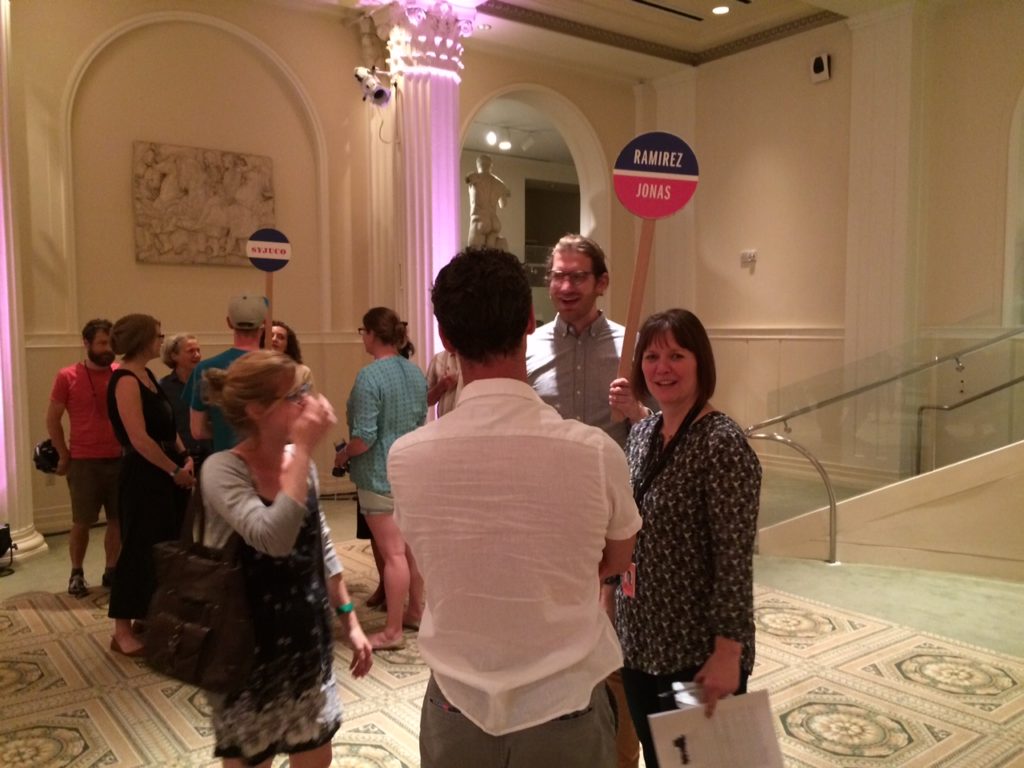
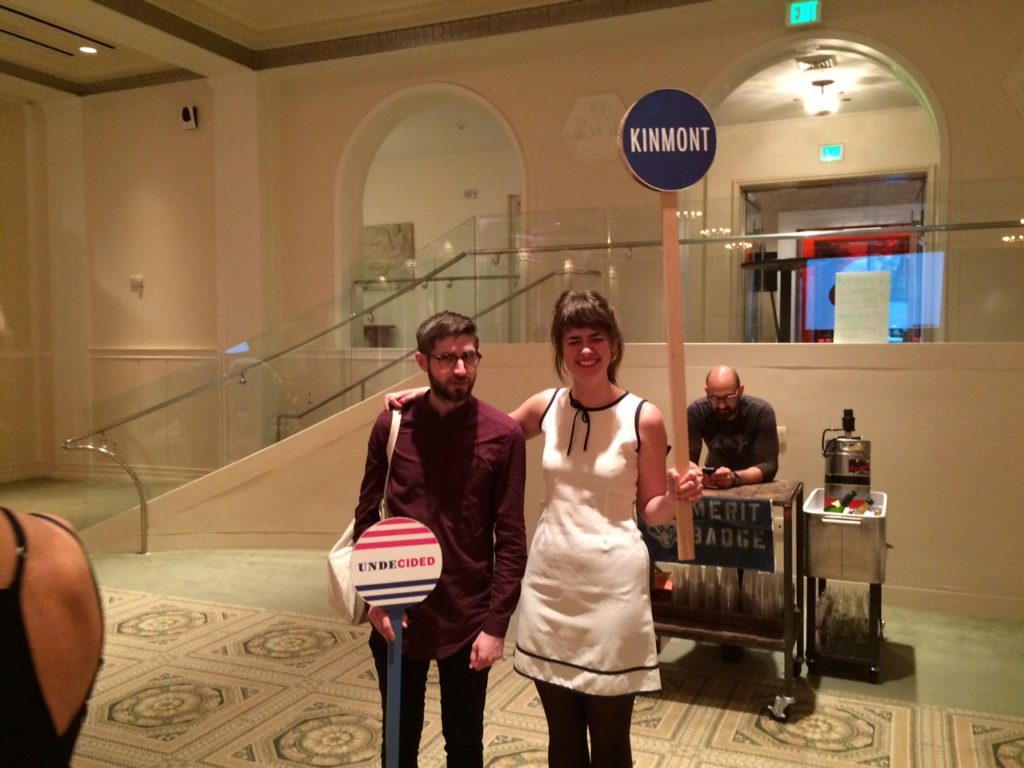
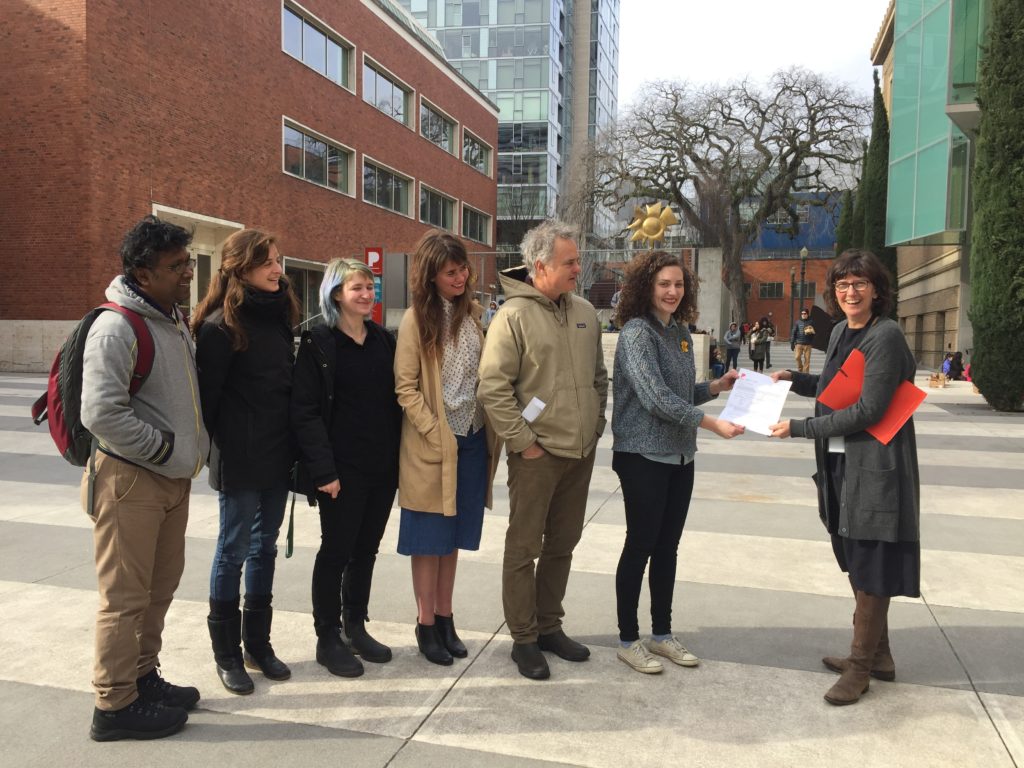

The Art & Social Practice program was invited to present a project for Shine-A-Light, the Portland Art Museum’s socially-engaged art program. We proposed to use our project honorarium fee (given to us by PAM) to purchase a social practice artwork and then donate that artwork back to the museum. This resulted in See You Again, a cocktail hour hosted in PAM’s ballroom where members of the public voted caucus-style for the first non-object artwork to be proposed to PAM’s permanent collection.
In short but passionate political speeches, each student argued in favor of one of six socially-engaged artworks presented to the public. Artists considered were Ariana Jacob, Paul Ramirez Jonas, Ben Kinmont, Carmen Papalia, Pedro Reyes, and Stephanie Syjuco. After a stirring debate and an eloquent argument by visiting artist Julie Ault, the audience voted for their favorite artwork by standing next to the corresponding flag.
At the end of the evening, Stephanie Syjuco’s notMoMA was chosen by the audience to be proposed for permanent collection to the Portland Art Museum.
The Art & Social Practice program purchased notMoMA from Syjuco and later formally presented it to PAM’s Acquisition Committee, who voted to include the work in the museum’s permanent collection. The process took a while, so in the meantime we presented the work at KSMoCA. The work now is part of PAM’s permanent collection and exists as a set of instructions for producing the work in the future.
Special thanks to Stephanie Parrish, Associate Director of Education and Public Programs at PAM, for her invitation and support of this project, and to Sara Krajewski, The Robert and Mercedes Eichholz Curator of Modern and Contemporary Art at PAM, who helped us with the acquisition process.
Lexa Walsh celebrates Dias de los Muertos with Oakland Museum of California
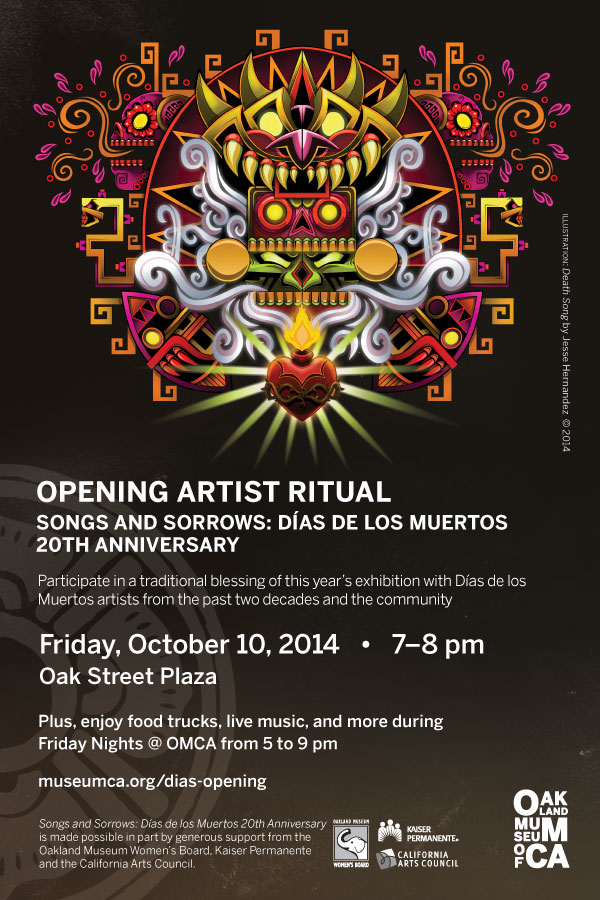
Alumna Lexa Walsh has been working with OMCA to dig through twenty years of archives and photos to create an installation celebrating their twenty year anniversary of Dias de los Muertos at the Museum. Walsh wanted to share not only the colorful history of offrendas and rituals and the heartfelt community input, but also and the piles of mundane paperwork, planning and hard work that went into each year’s celebration. She interviewed longtime stakeholders and shares selections of the archives, juxtaposed into a diorama-meets- offrenda. The show opens October 10th and runs through early January 2015.
Alum Katherine Ball receives Fulbright Award!
Congratulations to Katherine Ball for receiving the 2014-2015 Fulbright U.S. Student Award to Denmark!
“Katherine Ball is a habitat for fungi and bacteria located on planet Earth. Just as waves move an ocean, our collective movements swirl with experiments in alternatives to the dominant discourse, which have included: bicycling across the US to interview Americans working on small-scale solutions to the climate crisis, coordinating a national day of action to halt business at banks and corporations unduly influencing state laws, living in an off-grid floating island building mushroom filters to clean a polluted lake, and studying the behaviors of various species acting as the ecological counterpart to civil disobedience. An amateur in the best sense of the word originally from Detroit, Michigan, Katherine strives to give more energy to our dreams than our fears.”
-http://www.katherineball.com/About
To find out more about Katherine Ball’s practice, please visit http://www.katherineball.com.
Congratulations again, Katherine!
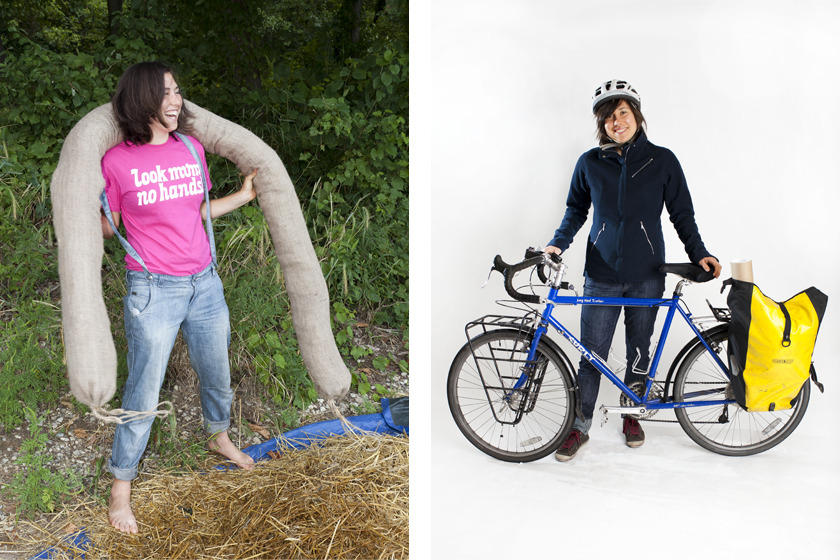
(from Katherine Ball’s website, www.katherineball.com)